Sample journal entry · Replace this proposed writing with your own words.
Colour is a relationship
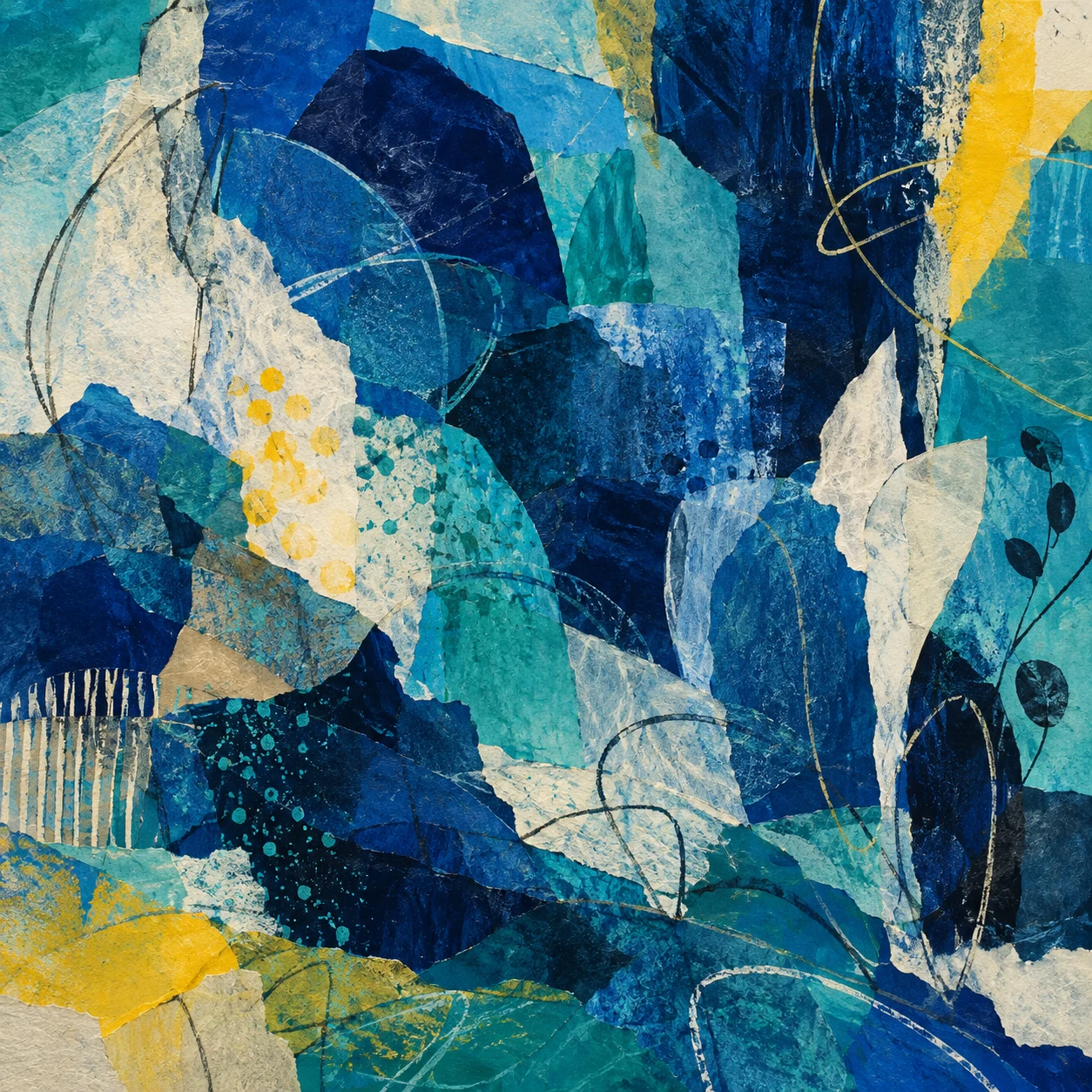
A colour never arrives alone. It meets the paper or canvas beneath it, the light around it, and every neighbouring mark. A muted tone can feel vivid beside a quiet one. An intense passage can become softer when given enough open space.
Thinking about colour as a relationship makes room for discovery. The useful question becomes less “Is this the right colour?” and more “What is happening between these colours?”
The quieter passages
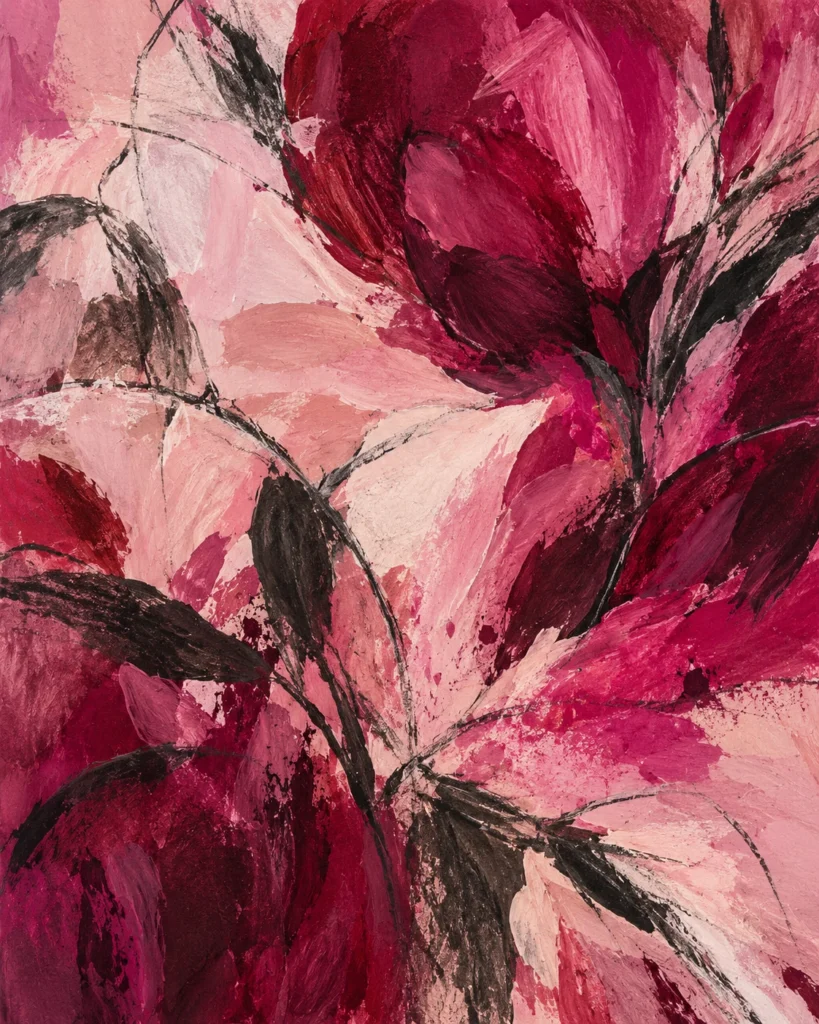
In an expressive work, the quieter passages matter as much as the bold ones. They give a gesture somewhere to travel and give the eye a place to rest. Quiet does not have to mean empty; a pale layer can carry the traces of everything beneath it.
The unpainted or lightly worked areas can also hold tension. A small mark beside a large open field may feel more insistent than a surface covered from edge to edge.
A surface that remembers
Layering allows a surface to keep a record of change. Some earlier marks disappear, while others remain at the edge of a new passage. The resulting image contains more than the final decision.
Texture gives those decisions a physical presence. A dry brush, a translucent wash, and an opaque stroke can speak differently even when their colours are close. Looking at the surface slowly is part of meeting the work.
An invitation to look again
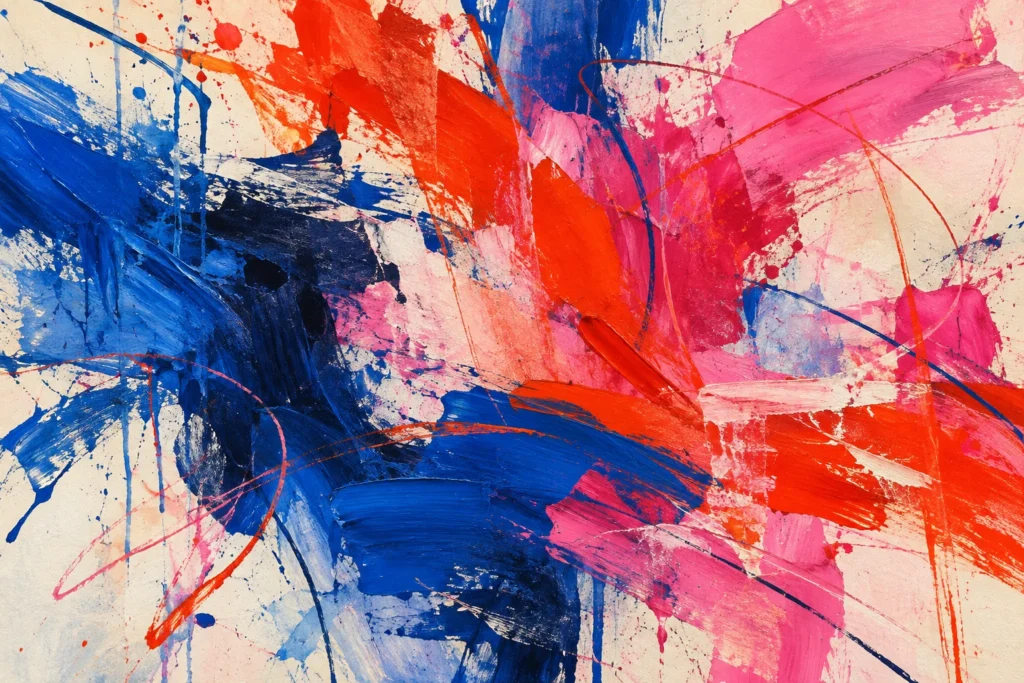
There is no single route through an abstract painting. Begin with whatever catches your eye, then notice where it leads. Look at the edges of a shape as well as its centre. Follow a repeated colour; pause where that repetition breaks.
The painting does not have to resolve into one explanation. Sometimes the reward is simply noticing more on a second encounter.

In the margins
The conversation
continues.
What stayed with you? A thought, a question, a different way of seeing — there’s room for it here.
No comments yet